Un nouveau jeu vidéo pour enseigner la Shoah
« Mon but est de faire que plus de développeurs s’y intéressent pour garder en vie la mémoire de la Shoah » (Luc Bernard)


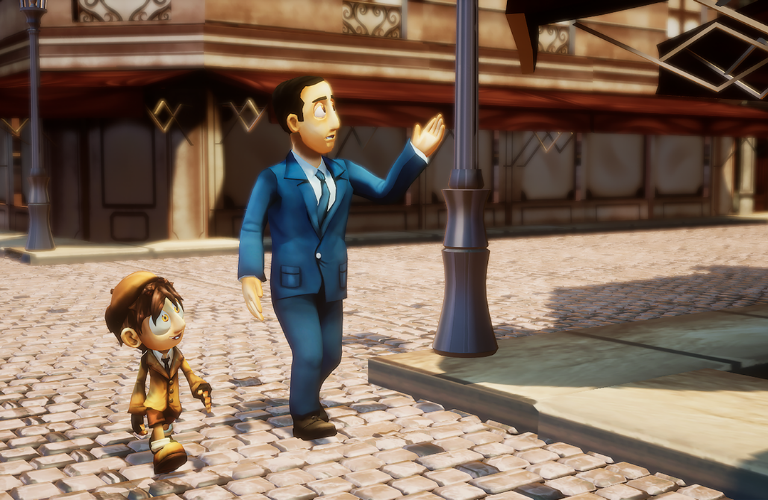
Le jeu vidéo « The Light in the Darkness » (La Lumière dans les Ténèbres), disponible depuis peu sur ordinateur a pour ambition d’enseigner la Shoah à ses joueurs. Son créateur le décrit comme le premier à représenter fidèlement l’entreprise d’extermination des Juifs d’Europe par les Nazis. Le joueur peut incarner les membres d’une famille juive française d’origine polonaise sous le régime collaborationniste de Vichy, jusqu’à leur arrestation en 1942 pendant la rafle du Vel d’Hiv, leur transfert vers le camp de Pithiviers et leur déportation dans les camps de la mort.
Le français Luc Bernard, concepteur de « The Light in the Darkness », considère comme problématique l’absence de la Shoah dans les jeux vidéo. « Les jeunes jouent à des jeux sur la Seconde Guerre mondiale, comme ‘Call of Duty’, où ce n’est presque pas évoqué », regrette-t-il. « C’est un peu comme si l’on niait que ça avait existé », poursuit-il.
Il compare son jeu à « un film d’animation interactif » dans lequel le joueur n’a pas la possibilité de modifier l’histoire. « Je ne pouvais pas faire un jeu où l’on gagne à la fin », explique-t-il. « Ce n’était pas ça la Shoah, il n’y avait pas le choix. »

Une joueuse joue au jeu vidéo sur la Shoah « The Light in the Darkness »
Avant de créer le jeu, Luc Bernard a consulté les archives du musée américain du mémorial de l’Holocauste à Washington et du musée de l’Holocauste de Los Angeles. Il a aussi recueilli des témoignages de survivants. Il a même déjà prévu une deuxième édition du jeu où fera raconter leur expérience à certains d’entre eux. « The Light in the Darkness » est disponible gratuitement sur la boutique en ligne d’Epic Games.
Luc Bernard veut « changer les choses au niveau éducatif » grâce aux centaines de milliards de dollars générés par les jeux vidéo et un réservoir de joueur dans le monde entier. Son but est de toucher un public large, notamment chez les plus jeunes. « Mon but est de faire que plus de développeurs s’y intéressent pour garder en vie la mémoire de la Shoah », confie-t-il.
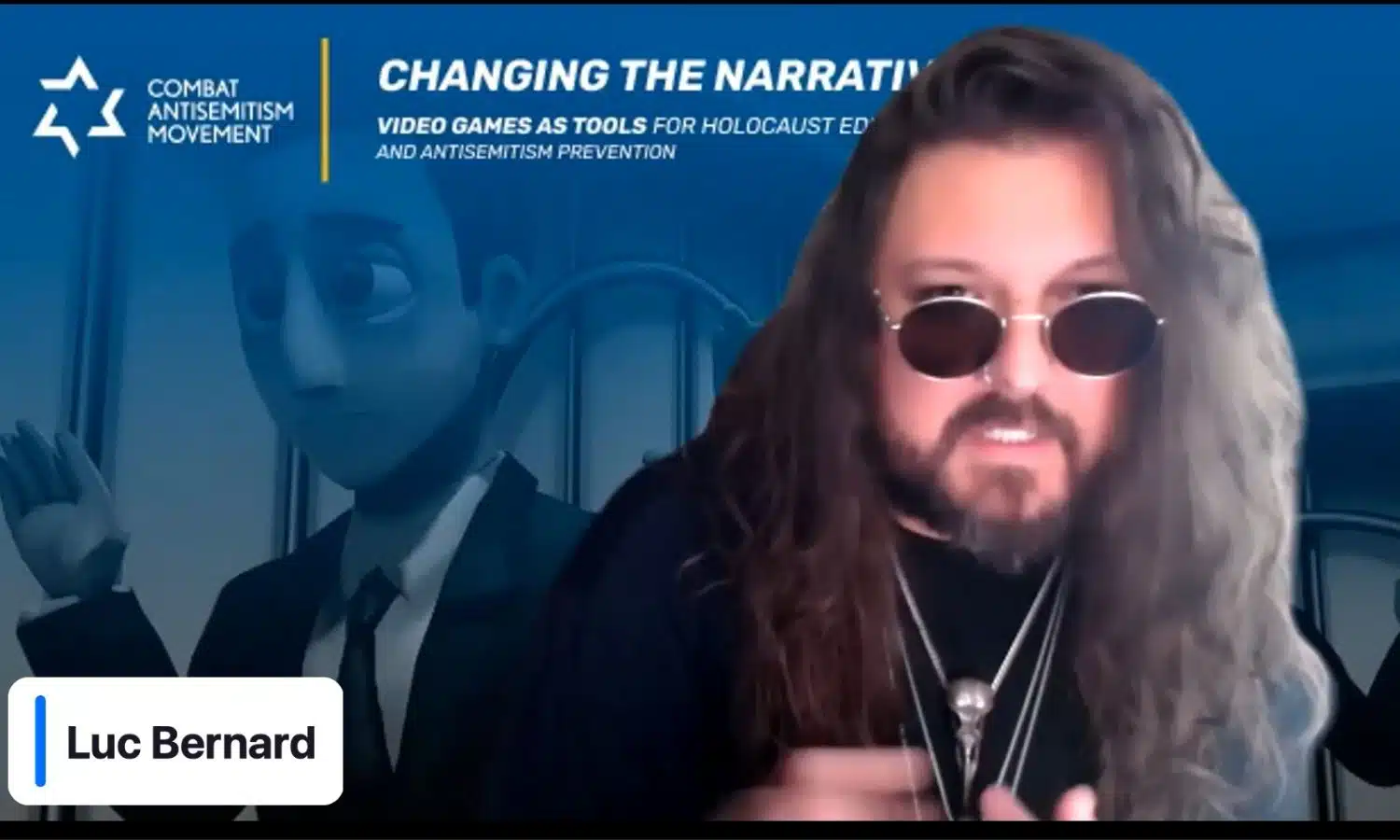
LE PLUS. The Combat Antisemitism Movement (CAM) hosted a webinar last week featuring acclaimed video game designer Luc Bernard, founder and executive director of Voices of the Forgotten and creator of “The Light in the Darkness,” an immersive, first-person perspective experience educating players about the Holocaust through the eyes of a French Jewish family persecuted by the Nazis.
During the online forum, Bernard demonstrated the game and spoke of the importance of passing down the lessons of the Holocaust to future generations and confronting contemporary manifestations of antisemitism.
“Holocaust education should be accessible to everyone no matter where they are,” he said. “Video games can shape the culture of the world. One billion people play on video game platforms. People are underestimating the scope and opportunity we have to not only educate, but inform. It’s not just about education, but exposure too, since so many young people today around the world know nothing about the Holocaust.”
“I want to tell the stories of those who died and humanize them,” Bernard added. “So much of the information we have is numbers, and where people died, and how they died. But who were they?”
The full webinar — “Changing the Narrative: Video Games as Tools for Holocaust Education and Antisemitism Prevention” — can be viewed here:
Bernard also took part in two panel discussions on antisemitism in gaming and Holocaust education, with other speakers including: Adviser on Technology and Law at the Center for Business and Human Rights Policy Mariana Olaizola Rosenblat; President of 3GNY Dave Reckess; Director for Combating Antisemitism and Holocaust Remembrance at the Israeli Ministry of Foreign Affairs Ruth Cohen-Dar; and Holocaust Educator Adi Rabinowitz Bedein.

“Video games, like any technology, can be used both for good and for bad,” Olaizola Rosenblat pointed out. “And there are definitely ways that Luc has shown us that they can be used for good, but this requires creativity, effort, and courage on the part of developers and also gaming companies.”
“A lot of teachers focus on the perpetrators, which is understandable, but we need to focus on the messages of resilience, empathy, altruism, and the lives of the survivors and the victims,” Rabinowitz Bedein noted.
Reckess commented, “We have a role to help our state and local governments enforce Holocaust mandates that teach every student, and we need to back it up with resources to make it effective, relatable, and relevant for students.”
“The biggest challenge today is to take this really important knowledge [and bring experts in education to bring this information to different audiences],” Cohen-Dar said. “Remember social media is a world without regulation, which is why toxic content spreads.”
CAM CEO Sacha Roytman Dratwa stated, “A critical component of our goal at CAM is to ensure antisemitism is tackled in every single corner where it lives. As we’ve learned, this age-old hatred has found its way into dialogue among the gaming community. Yet we’ve found hope in working with individuals like Luc Bernard who understand this community and are working hard to ensure the truth has a fighting chance. If every individual tackles bigotry and hatred in their spheres of influence, collectively we will be able to end antisemitism worldwide.”
Read a CAM interview with Bernard on “The Light in the Darkness” here.